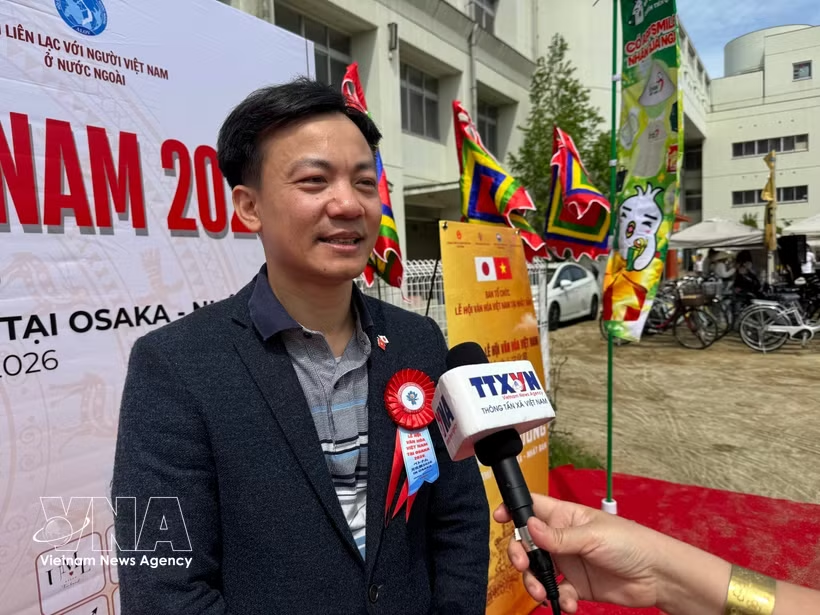
Cao Thanh Dinh, Founder and CEO of ANPz Co., Ltd (All Nippon Partners) in Japan in an interview with the Vietnam News Agency (Photo: VNA)
Regular and hands-on cultural exchanges involving Japanese communities can help deepen mutual understanding and trust between Vietnam and Japan, Cao Thanh Dinh, Founder and CEO of ANPz Co., Ltd (All Nippon Partners) in Japan told the Vietnam News Agency on the occasion of Vietnam Culture Day (November 24).
Drawing on his experience with exchanges and engagement in Hiroshima, Dinh said Japanese audiences are attracted to Vietnamese culture through familiar elements such as cuisine, coffee, ao dai, folk music and hospitality. However, sharing stories about Vietnamese people, families and daily life can help turn initial curiosity into deeper interest.
By making coffee, preparing dishes and talking directly with Vietnamese people, Japanese participants have more opportunities to learn about Vietnamese lifestyles and the values cherished by the Vietnamese people, Dinh said.
He suggested creating more opportunities for the Japanese public to take part directly in cultural activities, saying that cultural content should be presented in accessible Japanese and tailored to different audiences, with regular cooperation involving schools, international exchange associations and local organisations.
According to him, the success of cultural promotion is also reflected in whether participants are motivated to learn more and return after their first encounter.
Regarding cooperation opportunities under Resolution No. 80-NQ/TW of the Political Bureau on the development of Vietnamese culture, Dinh said businesses from the two countries could focus on three areas: cultural tourism linked to local life and traditions; developing culturally distinctive products such as coffee, food and handicrafts; and promoting creative industries, performing arts and education.
Combining Vietnamese materials, techniques and cultural stories with Japanese expertise in design, quality management and distribution could generate practical business opportunities. Small-scale initiatives should be piloted before wider expansion, he said.
However, effective cooperation requires clear arrangements on implementation, funding, beneficiaries, usage rights, and evaluation criteria. Artisans and local communities should also be involved in developing activities and receive due recognition and benefits, he stressed.
Dinh said Vietnam could contribute to global cultural diversity by sharing stories of family, community, nature, solidarity and aspirations for peace through cuisine, handicrafts, music and everyday exchanges. Traditional music, in particular, could connect Vietnamese and Japanese audiences through their cultural identities and shared values.
For Vietnamese communities in Japan, preserving cultural identity starts at home through speaking Vietnamese, family meals, and celebrations of the Lunar New Year (Tet) festival and the Mid-Autumn festival. However, children growing up in Japan face different linguistic and social environments, making engaging cultural activities essential to passing traditions on to younger generations.
He suggested that children learn Vietnamese through cooking, singing and family storytelling, while older children can participate in bilingual presentations, video production and traditional games. Inviting Japanese friends and families to join will also help strengthen community ties.
To promote these exchanges, Dinh proposed a programme entitled “Experiencing Vietnamese-Japanese culture together”, initially featuring regular activities in Hiroshima before expanding through partnerships. Sessions could include Vietnamese cooking, coffee brewing, making toys for Mid-Autumn festival, and exploring traditional musical instruments.
He emphasised that cultural understanding grows through regular interaction, with each opportunity for children to learn Vietnamese, Japanese families to discover Vietnam, and artisans to pass on traditional skills helping build lasting connections between the two peoples.
VNA