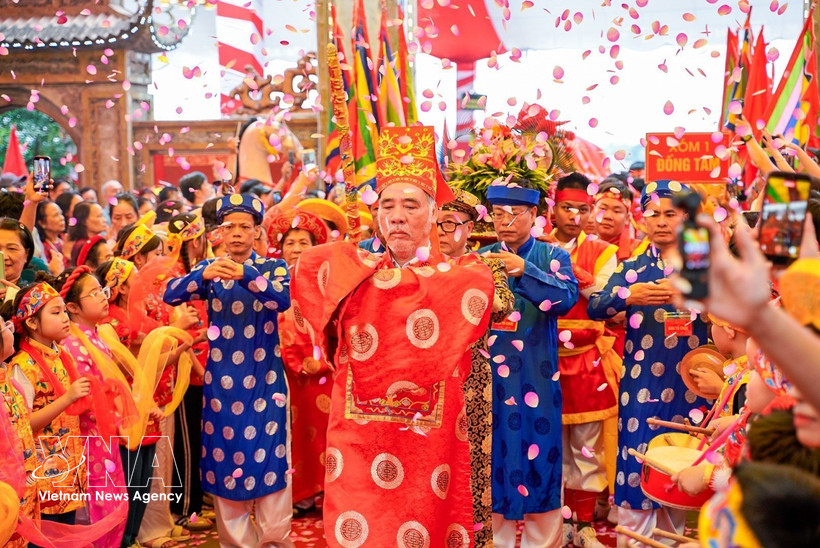
 A festival at Bat Trang pottery village in Hanoi. (Photo: VNA)
Vietnam’s tourism sector is striving to maintain growth momentum as rising fuel prices drive up travel costs, forcing businesses to adapt, restructure products and shift toward more short-haul markets.
Cost pressure mounts, many long-haul tours cancelled
The spike in fuel prices has created a domino effect across the tourism value chain, from transportation and accommodation to entertainment services. Airfares – accounting for a large share of tour prices – have risen sharply on both domestic and international routes, leading to cancellations of long-haul tours and weakening demand from distant markets.
Nguyen Quoc Ky, Chairman of Vietravel Holdings, warned that without timely responses, rising fuel costs could establish a new price baseline for the entire service sector. The current surge affects not only airfares but also ground transport, accommodation, food, logistics and operating expenses.
“The tourism sector is being pushed into a reactive position as long-haul markets respond quickly. Many European tour groups have postponed or cancelled trips to Vietnam,” Ky said, noting that overseas Vietnamese remain a key source of visitors though higher travel costs are gradually dampening demand.
The impact is also evident in the leisure and resort segment, where bookings from distant markets, particularly the Middle East, have begun to be cancelled. Last-minute ticket purchases at entertainment complexes are also falling, raising concerns ahead of the peak travel season, including the April 30–May 1 holiday and the summer period, according to Tran Nguyen, Deputy CEO of Sun Hospitality & Entertainment Group.
Faced with these challenges, travel firms are prioritising cost control and product restructuring.
Pham Anh Vu, Deputy General Director of the Du Lich Viet company, said airfares currently account for 50–70% of package tour prices, meaning any fluctuation directly affects pricing and consumer behaviour.
“Customers are becoming more cautious, especially families and small groups. Many are switching to nearer destinations, choosing road-based tours or comparing total costs between domestic and outbound travel,” Vu said, adding that slower booking decisions are forcing companies to design more flexible products.
Firms struggle to keep stable prices, retain customers
To sustain demand, businesses are striving to keep prices stable despite rising input costs.
Vu noted that his company has negotiated early with airlines and transport providers to lock in group fares, helping maintain relatively stable pricing for pre-booked packages. At the same time, promotional campaigns and added-value services are being introduced to stimulate demand, with customer retention prioritised over profit margins in the short term.
Nguyen said Sun Group is tightly controlling all operating costs, from personnel and operations to equipment while maintaining service standards. Simultaneously, it is working continuously with international partners to reassess each market segment and adjust its plans accordingly.
Shifting focus to nearby markets is emerging as the most suitable option at present. Asian visitors already account for more than 70% of international arrivals in Vietnam, with Southeast Asia and India offering strong growth potential. These markets proved resilient in the post-pandemic period and are less sensitive to long-haul airfare fluctuations.
Another solution gaining traction is the development of all-in-one travel packages combining flights, accommodation, dining and entertainment. This approach helps reduce overall trip costs rather than cutting individual service prices, making travel more affordable while preserving service quality.
Some major hospitality brands like Vinpearl have opted to keep prices unchanged to avoid discouraging travellers, instead enhancing service value through bundled experiences. Vietnam’s reputation as a safe and stable destination remains a key advantage, particularly as rising long-haul costs redirect tourists toward closer destinations in Asia, noted head of market development at Vinpearl Nguyen Van Hai.
However, industry experts stress that business-level adjustments alone are not enough. Faster and stronger policy support is needed to maintain competitiveness, especially as regional rivals such as Thailand, Singapore and Malaysia have swiftly introduced stimulus measures to assist businesses and attract tourists.
Sustaining advantages of safe destination
At the local level, Ho Chi Minh City is implementing demand stimulus programmes and promoting short-haul, urban, green and waterway tourism products. Authorities are also encouraging closer cooperation between airlines and travel firms to develop cost-efficient packages and enhance visitor experiences, said Tran Ngoc Dong Quan, head of travel management at the municipal Department of Tourism.
At the national level, Deputy Director of the Vietnam National Authority of Tourism Ha Van Sieu highlighted the country’s diversified market structure as a buffer against external shocks. The priority now is to reinforce the country’s image as a safe, attractive and hospitable destination while improving competitiveness through innovation and new tourism products.
Dr. Luong Hoai Nam, an aviation and tourism expert, called for further visa policy reforms to enhance accessibility. Expanding visa exemptions and introducing tailored visa categories for different traveller segments could help attract more international visitors and support long-term growth.
Duong Duc Minh, Deputy Director of the Ho Chi Minh City Institute for Economic and Tourism Development Research, said stronger inter-sector coordination is needed to ensure energy security, maintain strategic air routes, diversify fuel supply sources, and support marketing. Such measures can help preserve the tourism ecosystem and sustain growth in the face of external shocks.
VNA