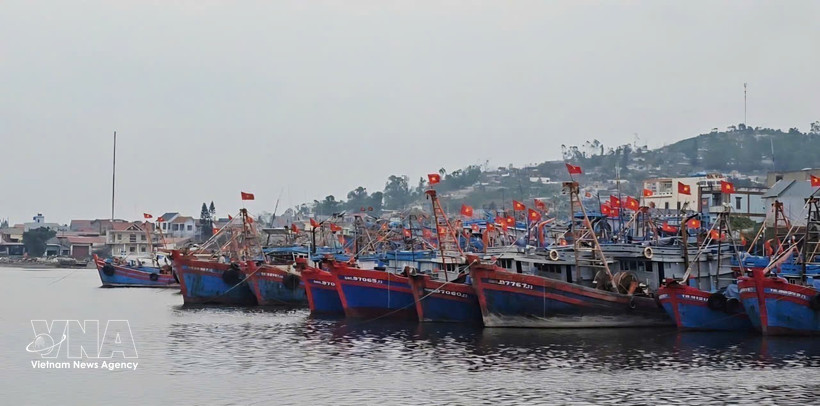
A section of the vessel anchorage area at the Lach Bang fishing port in Thanh Hoa. (Photo: Hoa Mai)
Thanh Hoa, a north-central province with a bustling fishing fleet and a network of ports and anchorages that welcome thousands of vessels from near and far, is ramping up efforts to modernise its fisheries industry.
The move includes upgrading port infrastructure, digitalising vessel management and tightening seafood traceability in line with recommendations from the European Commission.
The province currently has four fishing ports designated by the Ministry of Agriculture and Environment to receive offshore fishing vessels, namely Lach Hoi, Lach Bang, Hoa Loc and Hai Chau. These facilities have been equipped with modern, comprehensive infrastructure and largely mechanised cargo-handling systems, around 90%, enabling efficient unloading, transport and trade.
Lach Bang is among the first three ports nationwide selected to pilot an exemplary fishing port model launched in September last year. The initiative goes beyond physical upgrades, placing strong emphasis on digital management, enhanced monitoring and transparency in fishing activities.
A key requirement of the model is that all vessels measuring 15 metres or longer must maintain continuous connection to vessel monitoring systems (VMS). Data on vessels entering and leaving port are integrated and shared between the Ministry of National Defence’s management system and the national fisheries database, VNFishbase. To address fishermen’s concerns about completing electronic catch logs offshore, the electronic catch documentation and traceability (eCDT) and VNFishbase systems operate in both online and offline modes, allowing data to be stored without a signal and synchronised automatically once connectivity is restored.
The Lach Bang port authorities use three cameras to monitor vessel movements at the harbour entrance and within the port area, ensuring both security and regulatory compliance. Information on species, catch volumes, and fishing grounds is digitised and cross-checked against logbooks, electronic traceability systems and VMS data.
According to Dinh Tien Dat, who is in charge of Lach Bang, with an annual cargo-handling capacity of about 80,000 tonnes, the port serves not only as a mooring and trading hub but also as a key fisheries logistics centre for the north-central region. The model port initiative, he said, is gradually establishing new standards for fisheries development and seafood traceability at source.
Le Van Thang, director of the provincial fishing port management and fishing vessel registry authority, said the province is now replicating the model at Lach Hoi, Hoa Loc and Hai Chau ports, all of which meet conditions for certifying the origin of seafood products.
VNA