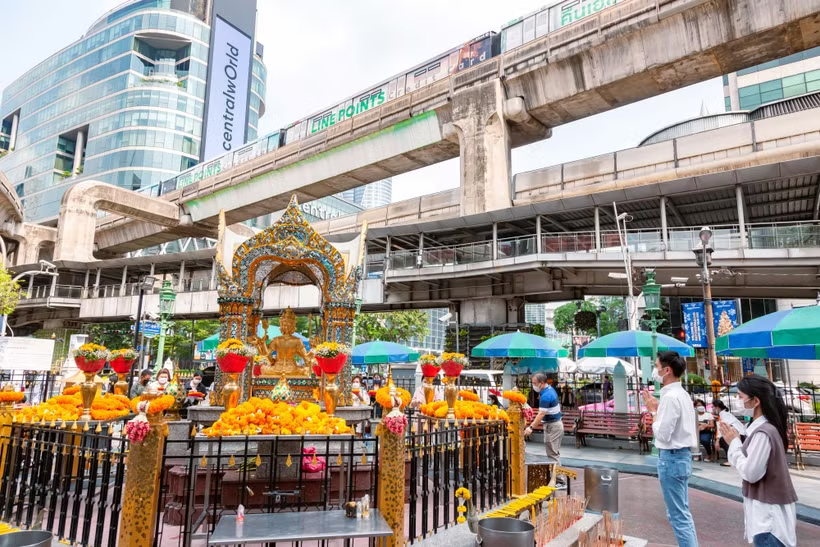
 Erawan Shrine is a Hindu shrine located in front of Grand Hyatt Erawan Hotel at the Ratchaprasong intersection on Ratchadamri Road in Lumphini Sub-district, Pathum Wan district, Bangkok. (Photo: tourismthailand.org)
Tourism operators in Thailand are urging the government to adopt clearer policies to ease mounting debt burdens and enhance the competitiveness of small and medium-sized enterprises (SMEs) amid rising costs driven by the global energy crisis.
Adith Chairattananon, honorary secretary-general of the Association of Thai Travel Agents, said that existing support measures, including subsidies under the latest phase of the Khon La Khrueng Plus co-payment scheme, are insufficient to sustain growth in the context of ongoing tensions in the Middle East.
People can now buy fewer goods or smaller baskets with the same amount of money compared to last year as energy crisis has pushed up logistics, energy and product costs, reducing consumers’ purchasing power.
The situation has placed significant strain on SMEs, which account for the majority of businesses in Thailand. Many have become non-performing borrowers and are unable to expand due to weak demand.
Adith stressed that the government should introduce measures to maintain reasonable prices for essential commodities, including fuel and electricity, while prioritising debt resolution to help ensure business competitiveness.
Sharing a similar view, Chai Arunanondchai, president of the Tourism Council of Thailand, said the current crisis largely stems from external factors beyond domestic control. He noted that businesses are willing to adjust operations to cope with higher energy costs faced by consumers and travellers.
He called on the government to ease the burden on enterprises by ensuring adequate supplies of goods at stable and reasonable prices. In addition, authorities should attract new foreign investment and improve the capacity of tourism operators, particularly in emerging sectors such as green tourism and wellness services, while addressing capital shortages and debt challenges.
Regarding tourism policy, Adith described the focus on high-value tourism as a positive direction, but emphasised the need for effective mechanisms to ensure fair income distribution, positive social and environmental impacts, and equitable employment opportunities.
He also suggested that Thailand diversify further into short-haul markets less affected by Middle East tensions through charter flight programmes and promotional campaigns. At the same time, the country should address long-standing issues such as airport congestion and weak connectivity between major and secondary cities.
VNA