With the goal of building a smart and sustainable tourism ecosystem, provinces and cities across the Mekong Delta are stepping up efforts to promote green tourism models, adapt to climate change and adopt digital technologies. A range of proposals and solutions have been put forward to make effective use of local resources, preserve cultural values, improve community livelihoods and accelerate digital transformation in tourism.
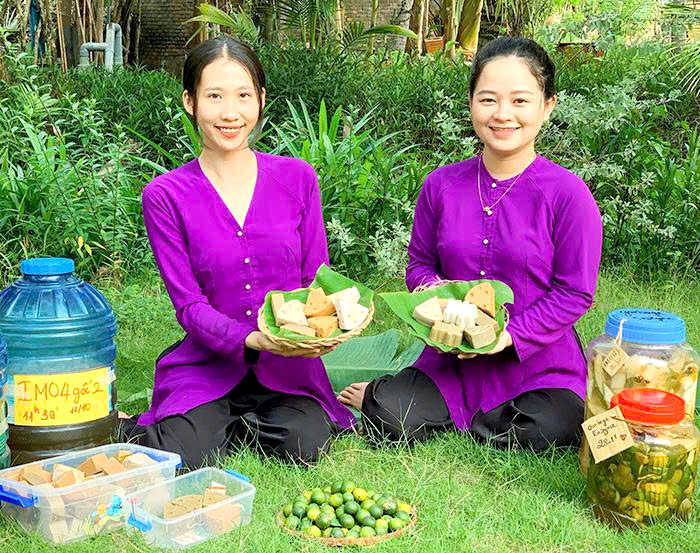
At various conferences on sustainable tourism, Mekong Silt Ecolodge has presented circular-economy solutions that turn organic waste into distinctive tourism experiences. Photo: AI LAM
Multiple Solutions for Sustainable Tourism Development
Assoc. Prof. Dr. Dao Ngoc Canh noted that the Mekong Delta boasts distinctive natural landscapes and local cultural experiences shaped by its riverine environment. However, the region faces numerous challenges related to climate change, environment and community livelihoods. Tourism development tied to green transition and digital transformation is therefore an important way forward, creating opportunities to tap the region’s potential more effectively while strengthening its capacity to adapt and ensuring the long-term sustainability of tourism.
According to Nguyen Thu Cuc from the University of Social Sciences and Humanities, Vietnam National University Ho Chi Minh City, the Mekong Delta is well-positioned to develop community-based tourism thanks to its network of rivers and canals, fruit orchards, wetlands, mangrove forests and rich biodiversity. A number of community-based tourism models have taken shape and attracted visitors, including Son Islet in Can Tho City, An Binh Islet in Vinh Long Province, and eco-tourism sites in the mangrove and melaleuca forests in An Giang and Ca Mau. These models not only generate livelihoods but also contribute to the conservation of natural resources and the environment.
Nguyen Thu Cuc proposed developing community-based tourism aligned with Net Zero goals, combining nature conservation, green livelihoods, and climate change adaptation. To maximize effectiveness, she emphasized five priority pillars: community governance and resource co-management; ecosystem conservation and restoration; emissions reduction; circular economy and green livelihood development; and environmental education to promote responsible tourism.
From a business perspective, Ngo Van Lieu, Director of Tru by Hilton Can Tho, said the city has a number of tourism models focused on sustainability, with each organization taking its own approach from the circular economy and digital transformation to sustainable governance and community-based regenerative tourism. Drawing on this experience, he proposed an enterprise-led Digital - Circular - Green (E-DCG) framework, viewing the sustainability transition as a phased, cumulative process that moves from digitalization to the circular economy and sustainable governance, while strengthening community participation and improving destination resilience.
Applying digital technology to tourism development
Dr. Nguyen Van Quang, Rector of Nam Can Tho University, highlighted that digital transformation and artificial intelligence (AI) are reshaping the tourism industry, from the way visitors search for destinations to service management and operations. Technology should be designed to serve people and protect core cultural values. A destination can only be truly smart when technology connects meaningfully with people. At the same time, sustainable tourism development must strike a balance among economic benefits, environmental protection, cultural preservation and improvements in local quality of life.
A research team led by Nguyen Thi Nhung of Nam Can Tho University proposed using 360-degree digital imaging and virtual reality (VR) to interpret cultural heritage and enhance conservation awareness among visitors to Khmer pagodas in Can Tho. This approach can diversify visitor experiences while promoting the responsible preservation and valuation of cultural heritage.
Prof. Dr. Richard Dare of International Leadership University (Myanmar) said AI can support forecasting, visitor-flow management, capacity planning, resource efficiency and market access for local businesses. To maximize its effectiveness, AI adoption requires clear objectives, interoperable data and active stakeholder participation.
According to Tran Viet Phuong, Chairman of the Mekong Delta Tourism Association, digital transformation helps maintain stability and drive the region’s tourism sector forward in a new phase of development. The association aims to build an interconnected ecosystem linking the association, businesses, digital platforms and tourists. Within this ecosystem, the association acts as a connector; businesses provide products and services; digital platforms support promotion, distribution and transactions; and visitors remain at the center.
The Mekong Delta Tourism Association is focusing on raising awareness of the role and significance of digital transformation in tourism and developing an implementation plan with specific tasks. As an initial step, the association is working with VNetrip Trading and Services Joint Stock Company to connect tourism businesses to the VNetrip digital platform and support the promotion and introduction of tourism products.
The VNetrip platform integrates a smart tourism map, an AI virtual assistant, service booking, e-commerce, digital payments, electronic authentication, product traceability and tourism data analytics. Through the platform, visitors can explore destinations, create personalized itineraries, book tours, purchase local specialties, access OCOP products and discover regional culinary cultures in the digital environment.
VNetrip has pledged to provide its platform free of charge to tourism businesses and organizations for the first six months, as well as offer training in technical operations, digital management and livestream promotional support.
Combining sustainable tourism development with digital technology applications will help the Mekong Delta adapt more effectively to climate change, strengthen its competitiveness and build its eco-tourism brand. Harnessing local resources, preserving cultural heritage and ensuring benefits for communities must go hand in hand with digital transformation, with the aim of creating a smart, green and sustainable tourism ecosystem.
AI LAM (Translated by Thanh Truc)










Director: HUYNH HOANG MEN
The license No 789/GP-BTTTT issued by... on Dec 2, 2021
Address: 24 Tran Van Hoai street, Can Tho city - Tel: (0292) 3830098 - Fax: (0292) 3830561 - Email: toasoan@baocantho.com.vn
Contact to Ads: quangcao@baocantho.com.vn
Developed by:


