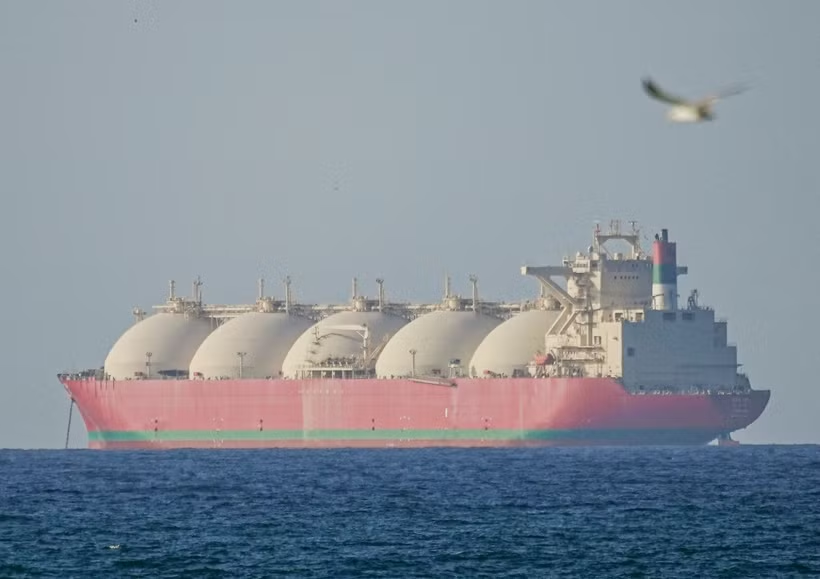
 Cargo vessels wait off the coast of Oman to transit the Strait of Hormuz following a two-week ceasefire agreement between the United States and Iran on April 8, 2026. (Photo: Anadolu Agency/VNA)
Finance ministers and central bank governors of the Association of Southeast Asian Nations (ASEAN) on April 10 expressed concern over escalating tensions in the Middle East and their potentially serious impact on the global economy.
In a joint statement issued after the 13th ASEAN Finance Ministers' and Central Bank Governors' Meeting (AFMGM) in the Philippines, the officials said they expressed concerns on rising geopolitical risks, global trade uncertainties, and disruptions to energy markets that may increase volatility in inflation, financial markets, and capital flows.
Officials emphasised the need to deepen policy coordination, enhance financial cooperation, advance inclusive and sustainable growth, deepen financial safety nets, accelerate digital transformation, and manage climate-related risks.
The same day, World Bank President Ajay Banga told Reuters in an interview that the war in the Middle East will have a cascading impact on the global economy, even if a ceasefire announced by US President Donald Trump takes hold.
The WB's baseline estimate now projects growth in emerging markets and developing economies of 3.65% in 2026, compared to 4% in October, dropping as low as 2.6% in an adverse scenario with a longer-lasting war. Inflation in those countries was now forecast to hit 4.9% in 2026, up from the previous estimate of 3%. The extreme scenario could see inflation rising as high as 6.7%, according to estimates viewed by Reuters.
The war, which has killed thousands of people across the Middle East, has sent the price of oil up by 50% while disrupting supplies of oil, gas, fertilizer, helium and other goods, as well as tourism and air travel.
The crisis has put a fresh spotlight on the need for countries to diversify energy supplies and boost self-sufficiency, Banga said.
WB is working with Nigeria and Mozambique to expand energy production, including oil refining, natural gas, hydropower and nuclear energy, in a bid to reduce reliance on traditional fuels and strengthen energy self-sufficiency.
VNA